
The rebirth of the ER II
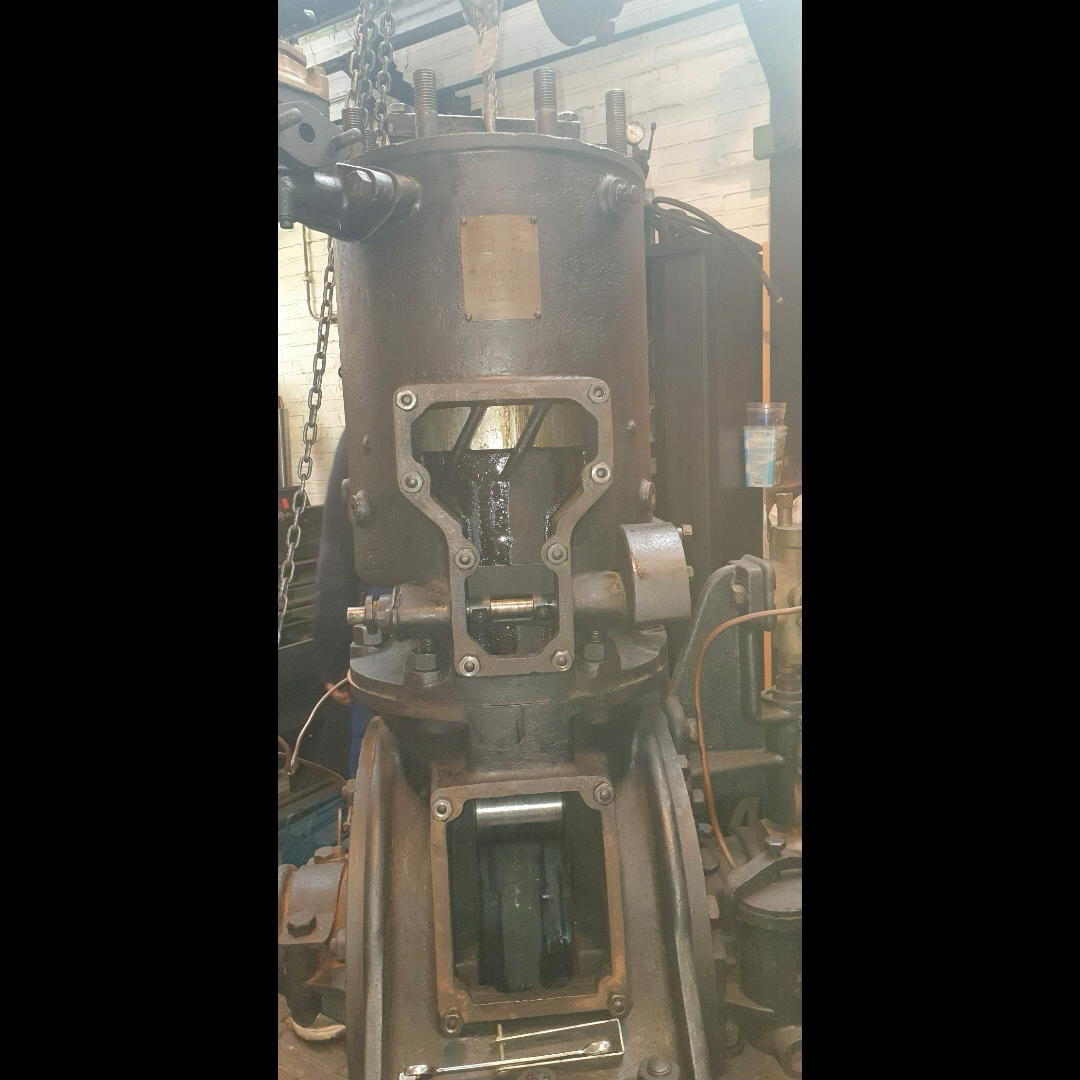
When the ER II arrived at our museum in 2019, it arrived in parts as a result of an engine swap.
The volunteers at that time probably did not fully realize what they were getting into and how long the restoration would take. But they were made enthusiastic by roaring videos on YouTube and so on. So let’s get started, but where do you start with a job like that?
With the basic actions: inventory and cleaning. Do we have everything? And are all parts present?
It soon became apparent that the piston had been mounted incorrectly as well as the crankshaft, the flywheel was loose and that a bearing cover had been cracked and provisionally repaired. So a “new” one was needed from the circuit. Studs were attached with tape. A lot of nuts were missing and that is not an easy task with a Kromhout engine. You won’t find them at the hardware store on the corner. The lubricating oil organ was completely dismantled and repaired and all cooling water ports were ragged. The connecting rod bearing was readjusted and the piston rings checked.
In short, a bulk of work was done on which a large part of 2020 and 2021 was spent in between the other activities. In addition, there was actually no good idea how to proceed. Where are we going to put the engine and how do we do that? And it would be very nice if the engine could also run. Because that was by no means certain.
Once the way forward was clear and there was a view of what to do, things went quickly. The engine was first provisionally built and measured in the workshop. Next the metal foundation was then designed. Nice and heavy, because we had no idea what forces could be released once the flywheel of more than 1300kg started turning. And there still had to be a support for the outer bearing.
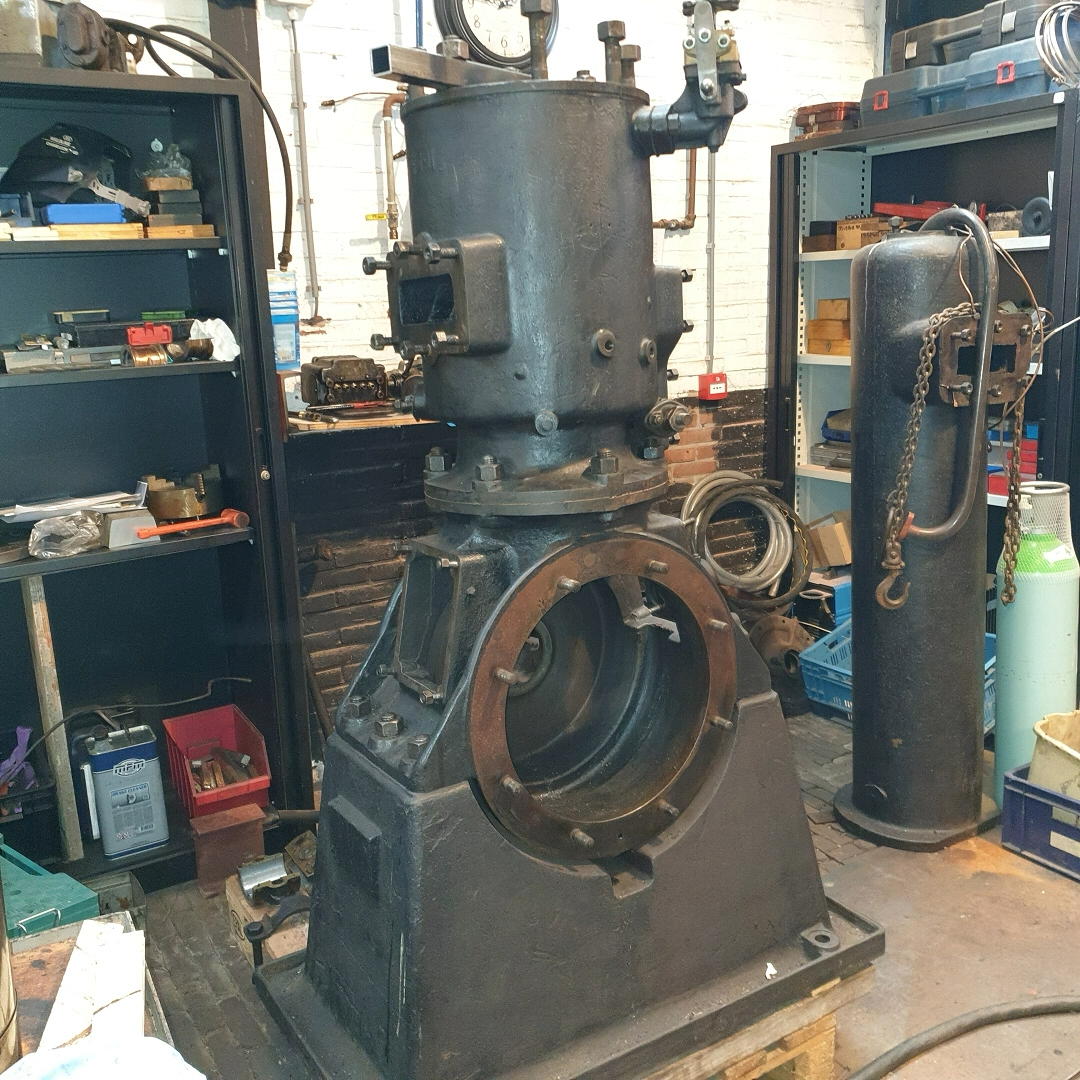

But it worked, so everyone was happy. After the concrete had hardened, the assembly could really begin. With the help of a tripod, hoists, a lot of manpower and much more inventiveness.
The beginning was relatively easy: place the base and bolt it down. The crankcase on top and the cylinder on top. It actually started to look like something. With the tripod and hoist the piston with connecting rod hoisted in and now in the right position, to then connect the connecting rod bearing to the crankshaft.
Crankshaft bearings with copper put on margin. Runs nicely. And then the highlight: the flywheel!! Don’t ask us how we did it, but in the end we succeeded!! We placed the outer bearing on its pedestal and aligned the three bearings in a row by measuring the size between the crankshaft cheeks. Then the man-sized silencer was placed.
We gradually wanted to know if the engine would want to run at all. So we installed a starter air system and a fuel tank. A gas burner for preheating and a start valve. First running only on air. See if it wants to turn and yes, in April 2024 the ERII made its first plops. More than 4 years after the arrival of the bike at the Kromhout. Hooray! So we can go on (not knowing that it would take another 1.5 years).

A weight off our mind. So now full speed ahead with the water cooling.
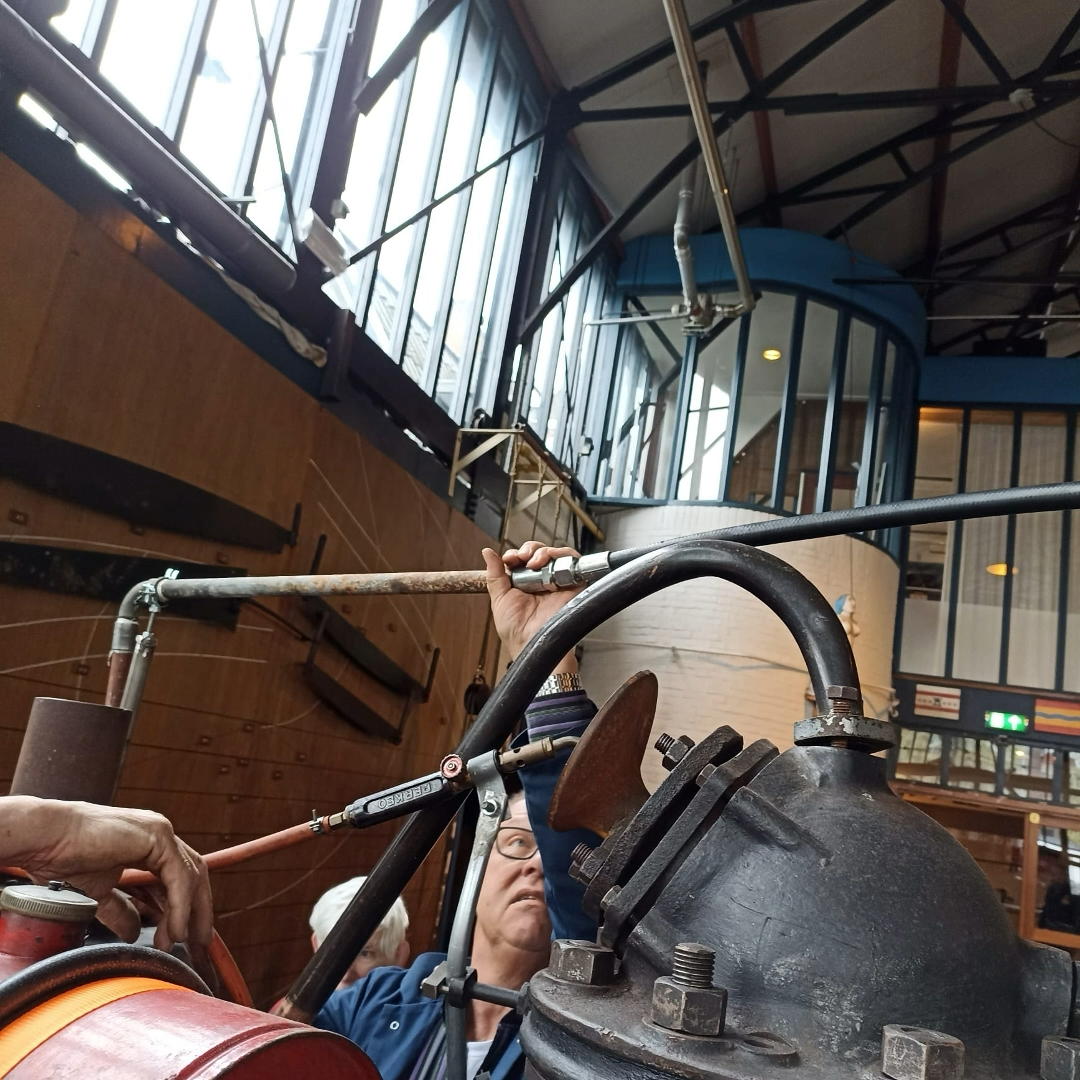
And that appeared to be heavy. What could be leaky was leaky. Not surprising after 100 years. We have replaced just about all flange and cord seals. . For heat dissipation, we use a cast iron radiator. An open expansion tank has been included in the system with a float to monitor water consumption. Technically, this completed the project.
But of course we were only really satisfied when the painter had also visited and we could proudly hand over the ERII to the museum’s collection.
This really has been a project of the entire museum. Practically every volunteer has contributed in one way or another and we are all very proud of that.